
As electric vehicles, commercial vehicles, industrial equipment, and other electrified applications continue to develop, the high-voltage battery system has become one of the most important components of the vehicle’s power system.
A complete battery system is not simply a collection of battery cells. It typically consists of battery cells or modules, electrical circuits, contactors, fuses, sensors, and electronic control units. Among these components, the Battery Disconnect Unit (BDU) and Power Distribution Unit (PDU) play an important role in high-voltage circuit protection, power distribution, and system control.
This article explains the basic architecture of a power battery system and the differences between BDU, PDU, and BCU.
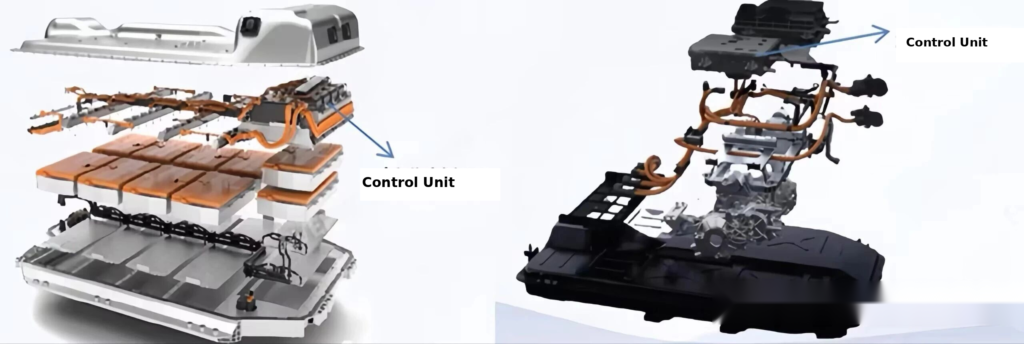
1. Power Battery System Architecture
A power battery system is an energy storage system that supplies electrical energy to the vehicle or equipment. It typically includes:
- Battery cells or battery modules
- Battery packs
- High-voltage electrical circuits
- Contactors and fuses
- Current and voltage sensors
- Battery Management System (BMS)
- Battery Control Unit (BCU)
- Other electrical and thermal management components
In general, battery systems can be designed in two typical configurations:
- Integrated architecture – the high-voltage control components are installed inside the battery enclosure.
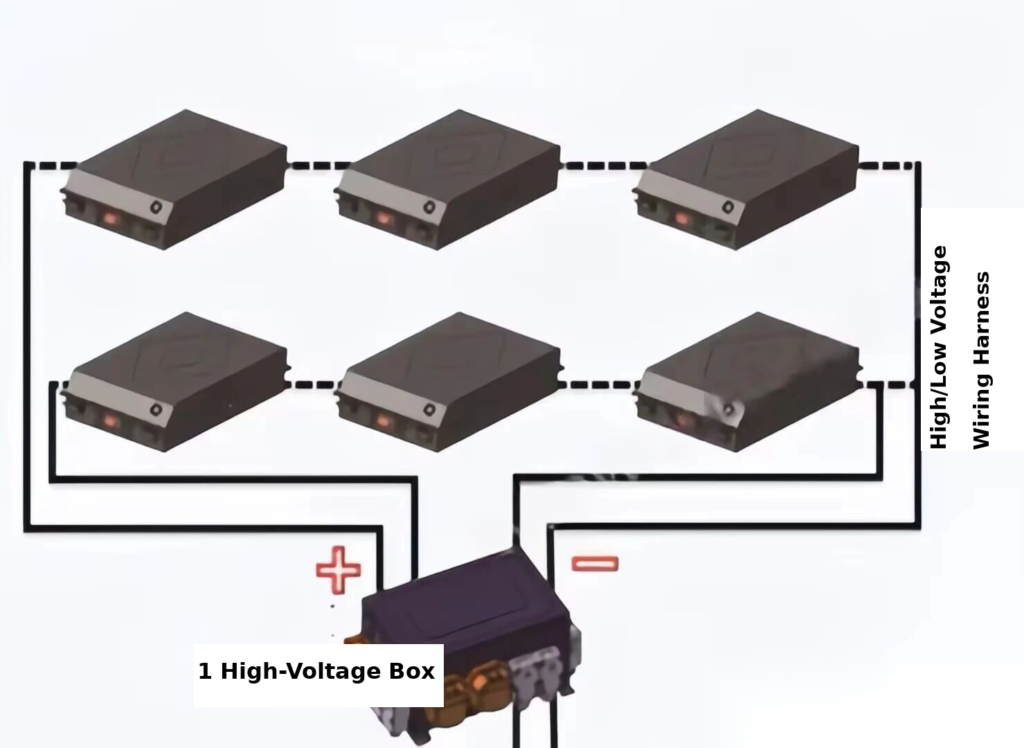
- External architecture – the high-voltage control unit is installed outside the battery enclosure as an independent module.
The actual architecture depends on the vehicle type, battery voltage, available installation space, power requirements, thermal management requirements, and system design.
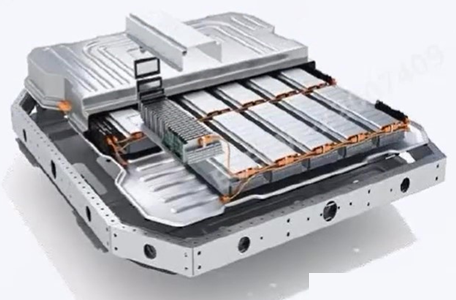
2. Integrated Architecture and BDU
In an integrated battery system, the high-voltage control components are installed inside the battery enclosure together with the battery modules.
This configuration is commonly referred to as a BDU (Battery Disconnect Unit) when the high-voltage disconnect and protection components are integrated inside the battery pack.
The main characteristics of an integrated battery system include:
- The battery modules and high-voltage control components are integrated into the same battery enclosure.
- The overall system can be more compact.
- High-voltage wiring can be simplified.
- Protection and switching components are located close to the battery modules.
- The design is suitable for applications with limited installation space.
This type of architecture is commonly found in passenger vehicles, compact commercial vehicles, engineering vehicles, and other electric-powered applications.
3. External Architecture and PDU
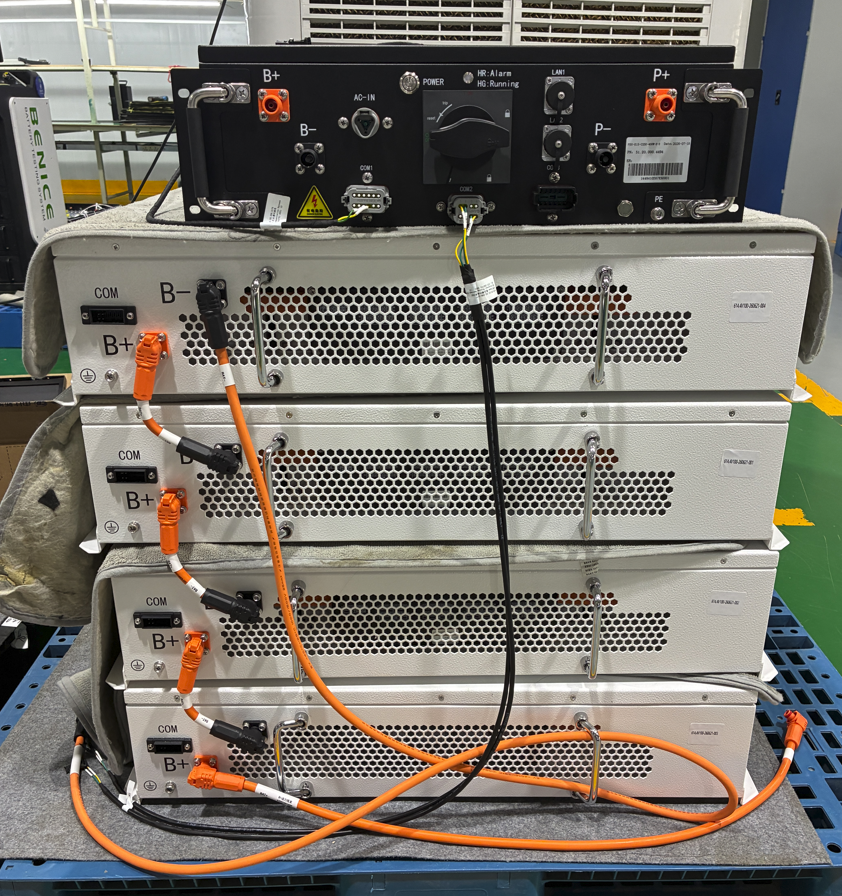
In an external architecture, the high-voltage control unit is installed outside the battery enclosure as an independent component.
Depending on the system design and functions, this external high-voltage unit may be referred to as a PDU (Power Distribution Unit) or an externally mounted BDU (Battery Disconnect Unit).
The main characteristics include:
- The high-voltage control unit is independent of the battery enclosure.
- The unit can be installed separately according to the vehicle layout.
- High-voltage power can be distributed to different vehicle systems.
- It provides greater flexibility for system integration.
- It is commonly used in commercial vehicles and other large electric platforms.
Compared with an integrated battery architecture, an external PDU/BDU can provide greater flexibility when multiple high-voltage loads and vehicle electrical systems need to be managed.
4. Key High-Voltage Battery System Terminology
Understanding the terminology is important when designing or purchasing a high-voltage battery system.
High-Voltage Box (HV Box)
A High-Voltage Box, also known as an HV Box, is a high-voltage electrical control and protection unit used to control the connection and disconnection of the battery system and manage high-voltage power distribution.
PDU – Power Distribution Unit
PDU stands for Power Distribution Unit.
It is mainly used to distribute high-voltage electrical power from the battery system to different electrical loads or vehicle systems.
BDU – Battery Disconnect Unit
BDU stands for Battery Disconnect Unit.
It is primarily responsible for controlling the connection and disconnection of the battery’s high-voltage circuit and providing electrical protection.
BCU – Battery Control Unit
BCU stands for Battery Control Unit.
The BCU is the main electronic control unit responsible for monitoring and managing the electrical and thermal performance of the battery system. It can also communicate with other vehicle control units.
In many battery systems, the BCU is considered the main controller of the battery system.
Contactor / Relay
A contactor is an electrically controlled switching device used to connect or disconnect high-voltage circuits.
In high-voltage battery systems, contactors are generally used for the main positive circuit, main negative circuit, and pre-charge circuit.
Fuse
A fuse is a protection device designed to interrupt the circuit when the current exceeds a specified limit.
When excessive current flows through the fuse, the fuse element generates heat and melts, thereby disconnecting the circuit and protecting the battery system.
Pre-Charge Resistor
A pre-charge resistor is a power resistor used in the pre-charge circuit.
Its main function is to limit the initial inrush current when the battery system is connected to capacitive loads, such as the DC-link capacitors of an inverter or motor controller.
Hall-Effect Current Sensor
A Hall-effect current sensor uses the Hall effect to measure electrical current and convert the magnetic field generated by the current into an electrical signal.
It provides electrically isolated current measurement and is widely used in battery systems.
Shunt
A shunt, or shunt resistor, is a precision low-resistance component used for current measurement.
The current is calculated by measuring the small voltage difference generated across the shunt when current flows through it.
MSD – Manual Service Disconnect
MSD stands for Manual Service Disconnect.
It is a manually operated high-voltage disconnect device used to isolate the battery system during maintenance, inspection, or service operations.
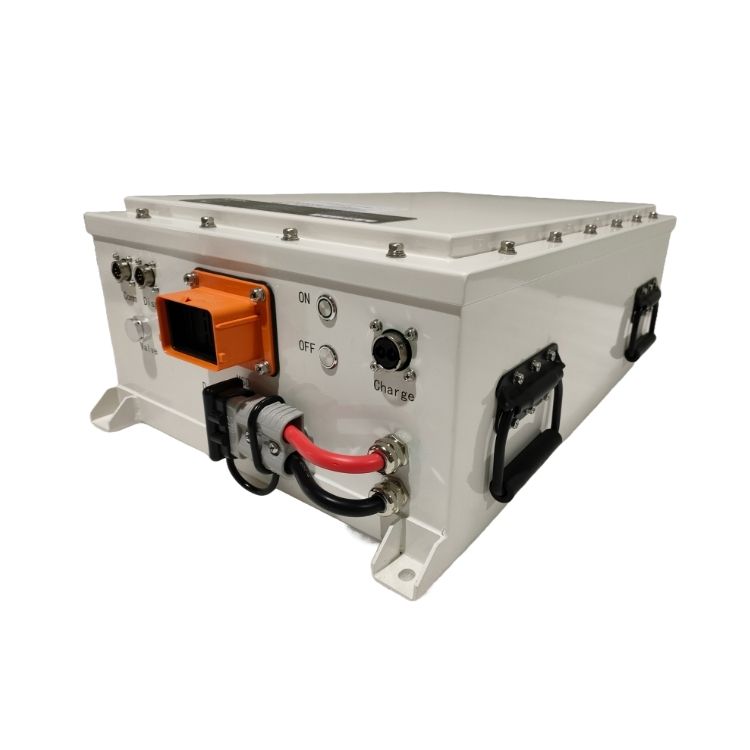
5. BDU vs. PDU
Although BDU and PDU are sometimes used interchangeably in the battery industry, they are not exactly the same in terms of their typical functions.
5.1 What Is a BDU?
A Battery Disconnect Unit (BDU) is an integrated high-voltage protection and switching module used to control the connection and disconnection of the battery’s high-voltage circuit.
It is an important component of the battery pack’s high-voltage electrical system.
A typical BDU may include:
- Main positive contactor
- Main negative contactor
- Pre-charge contactor
- Pre-charge resistor
- Fuse
- Current sensor
- High-voltage interlock components
- High-voltage connectors
- Other protection and monitoring components
BDUs can be designed for either internal installation inside the battery enclosure or external installation outside the battery enclosure.
The BDU works together with the BMS/BCU and other vehicle systems to manage the battery’s high-voltage circuit.
Its functions may include:
- High-voltage circuit connection and disconnection
- Pre-charge control
- Short-circuit protection
- Overcurrent protection
- Electrical isolation and safety protection
- High-voltage status monitoring
- Coordination with the motor control system
- Coordination with the charging system
- Coordination with battery heating and thermal management systems
5.2 What Is a PDU?
A Power Distribution Unit (PDU) is a high-voltage power distribution device used in electric vehicles and other high-voltage electrical systems.
Compared with a basic BDU, a PDU can integrate additional vehicle-level electrical functions.
Depending on the application, a PDU may integrate:
- BMS/BCU main control functions
- Charging functions
- DC/DC conversion interfaces
- PTC heater control
- High-voltage power distribution
- High-voltage protection
- Additional vehicle electrical interfaces
Therefore, a PDU is generally more highly integrated and functionally complex than a basic battery disconnect unit.
For high-power applications, the PDU may also incorporate liquid cooling or air cooling to manage heat generated by high-current electrical components.
6. BDU vs. PDU: What Is the Difference?
The simplest way to understand the difference is:
BDU focuses mainly on battery high-voltage circuit control and protection, while PDU focuses more on high-voltage power distribution and vehicle-level electrical integration.
| Item | BDU | PDU |
|---|---|---|
| Full Name | Battery Disconnect Unit | Power Distribution Unit |
| Main Function | Battery circuit switching and protection | High-voltage power distribution |
| Main Contactors | Yes | Yes |
| Pre-Charge Circuit | Usually | Usually |
| Fuse Protection | Usually | Usually |
| Current Sensor | Optional / Common | Common |
| Power Distribution | Limited | Main Function |
| Vehicle-Level Functions | Limited | More Integrated |
| Installation | Inside or outside battery pack | Usually outside battery pack |
| System Complexity | Relatively simpler | More complex |
The exact configuration varies depending on the vehicle platform and battery system architecture. There is no single universal definition for every manufacturer’s BDU or PDU.
Explore Our High-Voltage Lithium Battery Systems :Shop – HY Energy
7. Conclusion
The high-voltage box is a critical part of a modern power battery system. Whether the system uses an integrated BDU or an external PDU/BDU depends on the application requirements and overall vehicle architecture.
For passenger vehicles and compact electric platforms, an integrated battery architecture can provide a compact and highly integrated solution.
For commercial vehicles, industrial equipment, and larger electric platforms, an external PDU or BDU can provide greater flexibility for high-voltage power distribution and system integration.
Understanding the functions of BDU, PDU, BCU, contactors, fuses, pre-charge resistors, current sensors, shunts, and MSDs is essential when designing, manufacturing, or selecting a high-voltage battery system.
For battery manufacturers and system integrators, choosing the appropriate high-voltage architecture can significantly affect system safety, reliability, serviceability, thermal management, installation space, and overall system cost.