
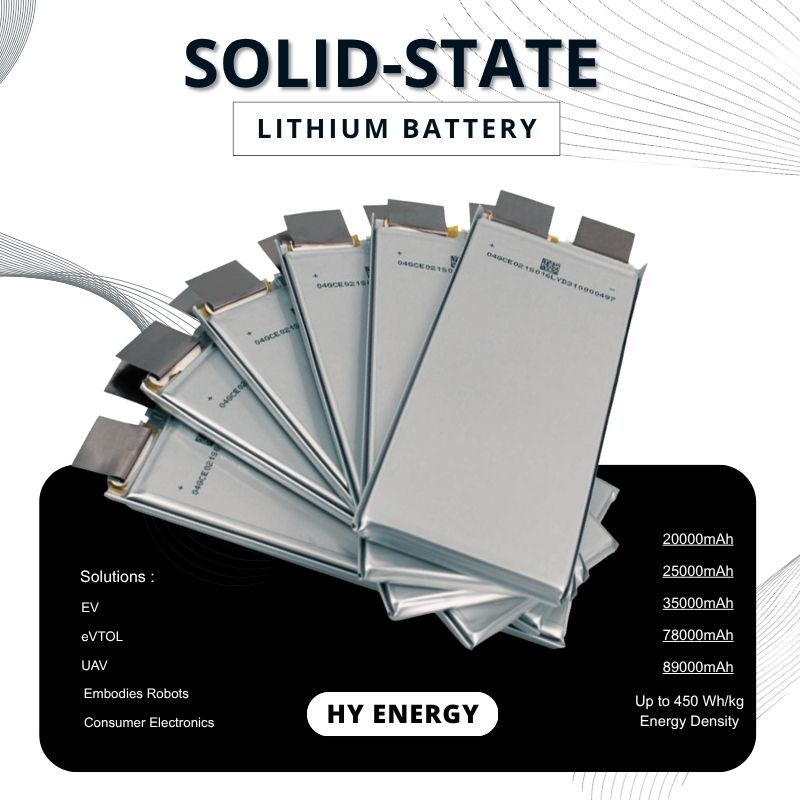
Introduction: Solid State Batteries Enter a New Era of Industrialization
In 2026, the global solid state battery industry is entering a critical transition period. After years of laboratory research and technology validation, solid state battery development is moving rapidly from the research stage toward engineering verification, pilot production, and commercial deployment.
Governments, automotive manufacturers, battery companies, and material suppliers worldwide are increasing investment in next-generation battery technologies. China has strengthened national-level support and introduced industry standards for vehicle solid state batteries, while Japan, South Korea, the United States, and Europe are accelerating research programs, manufacturing investments, and supply chain development.
The global competition for solid state battery technology is no longer only about scientific breakthroughs. It has become a competition involving:
- Battery material innovation
- Manufacturing capability
- Supply chain control
- Safety standards
- Commercial scalability
As electric vehicles, energy storage systems, and advanced mobility applications continue expanding, solid state batteries are expected to become one of the most important battery technologies of the next decade.
1. China: Policy Support, Industry Standards and Large-Scale Deployment
China remains the world’s largest lithium battery manufacturing hub. In 2026, the country further strengthened its strategic focus on solid state battery technology.
1.1 China Identifies All-Solid-State Batteries as a Key Technology Direction
China’s Ministry of Industry and Information Technology (MIIT) has identified all-solid-state batteries as one of the key breakthrough technologies for future power battery development.
The national strategy focuses on several critical areas:
- Solid electrolyte development
- Silicon-based anode materials
- High-capacity cathode materials
- Advanced battery manufacturing processes
- Battery testing and validation systems
Among these technologies, solid electrolytes are considered the core component of all-solid-state batteries. Compared with traditional liquid electrolytes, solid electrolytes provide:
- Higher safety performance
- Better thermal stability
- Potentially higher energy density
- Improved fast-charging capability
Meanwhile, silicon-based anodes and high-capacity cathode materials are expected to further increase battery energy density.
1.2 The First Vehicle Solid State Battery Standard Marks an Industry Milestone
In 2026, China introduced GB/T 43568-2026, the first national standard focusing on terminology and classification of solid state batteries for electric vehicles.
The standard provides clearer definitions for different battery technologies:
Liquid Electrolyte Battery
Traditional lithium batteries using mainly liquid electrolyte systems.
Hybrid Solid-Liquid Battery
Battery systems containing both solid electrolyte and a certain percentage of liquid electrolyte.
All-Solid-State Battery
Battery systems using solid electrolyte technology with extremely limited liquid electrolyte content.
The introduction of this standard is significant because the solid state battery industry previously lacked unified definitions. Terms such as “semi-solid battery”, “quasi-solid battery”, and “solid-state battery” were often used inconsistently.
Standardization will help:
- Improve market transparency
- Reduce misleading product claims
- Support automotive certification
- Accelerate commercialization
1.3 Local Governments Accelerate Solid State Battery Industry Development
Following national strategies, several Chinese provinces are actively building solid state battery ecosystems.
Guangdong: Building a Complete Solid State Battery Industry Chain
Guangdong is developing advanced battery industrial clusters covering:
- Battery materials
- Cell manufacturing
- Battery systems
- Recycling
The Guangdong-Hong Kong-Macao Greater Bay Area is becoming an important innovation center for next-generation energy technologies.
Anhui: Supporting New Energy Vehicle Battery Innovation
Anhui has included solid state batteries as a key direction for future automotive technology development.
With strong automotive and battery manufacturing capabilities, Anhui aims to strengthen cooperation between:
- Vehicle manufacturers
- Battery companies
- Research institutions
Jiangsu: Focusing on Commercialization and Technology Transfer
Jiangsu has listed all-solid-state batteries as a key future energy technology and supports pilot-scale production projects.
Sichuan: Developing Advanced Battery Materials
Sichuan is focusing on multiple solid state battery technology routes, including:
- Sulfide solid electrolytes
- Oxide solid electrolytes
- Polymer solid electrolytes
- Hybrid solid-liquid systems
2. Global Solid State Battery Development: Japan, Korea, US and Europe
2.1 Japan: Technology Leader with Strong Automotive Applications
Japan has been one of the earliest countries investing in solid state battery research.
Japanese companies, especially automotive manufacturers, have established clear commercialization roadmaps.
Leading companies include:
- Toyota Motor Corporation
- Honda Motor Co., Ltd.
- Nissan Motor Corporation
Japan’s advantages include:
- Strong battery material technology
- Extensive patent portfolio
- Advanced automotive engineering capability
Toyota has announced plans to introduce all-solid-state battery technology into electric vehicles in the coming years, focusing on:
- Longer driving range
- Faster charging
- Higher safety
2.2 South Korea: Battery Giants Accelerate Commercial Production
South Korea is another major player in next-generation battery technology.
Companies such as:
- Samsung SDI
- SK On
- LG Energy Solution
are investing heavily in solid state battery research and pilot production.
South Korea’s strategy focuses on:
- Reducing dependence on external supply chains
- Developing advanced battery materials
- Maintaining leadership in EV batteries
Solid state batteries are considered a critical technology for maintaining competitiveness in the global electric vehicle market.
2.3 United States: Government Funding and Domestic Manufacturing Push
The United States is promoting advanced battery technologies through government programs and industrial policies.
Key priorities include:
- Domestic battery manufacturing
- Advanced energy storage technology
- Supply chain security
The US Department of Energy has supported research programs targeting:
- Higher energy density batteries
- Advanced materials
- Solid electrolyte technologies
American solid state battery companies are also attracting significant private investment.
2.4 Europe: Battery Standards and Sustainable Development
Europe is focusing on:
- Battery sustainability
- Recycling requirements
- Carbon footprint reduction
- Local battery production
The European Union considers solid state batteries an important technology for reducing dependence on imported battery supply chains.
European battery strategies emphasize:
- Clean manufacturing
- Battery lifecycle management
- Sustainable materials
3. Global Solid State Battery Market Trends and Future Outlook
3.1 The Competition Has Shifted from Research to Industrialization
The solid state battery race is entering a new phase.
The key challenges are no longer only laboratory performance, but:
Manufacturing Scale
Producing solid state batteries consistently at large scale remains the biggest challenge.
Cost Reduction
Solid electrolytes and advanced materials currently have higher production costs compared with traditional lithium-ion batteries.
Supply Chain Development
Commercial success requires a complete ecosystem covering:
- Materials
- Equipment
- Cell manufacturing
- Battery packs
- Recycling
3.2 Solid State Batteries Will Complement Existing Lithium Battery Technologies
Although solid state batteries have significant advantages, traditional lithium iron phosphate (LiFePO4) and lithium-ion batteries will continue to dominate many applications in the near term.
Different battery technologies will serve different markets:
| Battery Technology | Main Applications |
|---|---|
| LiFePO4 Battery | Energy storage, commercial vehicles, marine, industrial equipment |
| NMC Lithium Battery | Passenger EVs requiring higher energy density |
| Solid State Battery | Future premium EVs and high-performance applications |
Conclusion: Solid State Batteries Are Entering the Industrialization Era
In 2026, solid state battery technology is moving from concept validation toward real-world commercialization.
China, Japan, South Korea, the United States, and Europe are competing in technology development, manufacturing capability, and industry standards.
The next few years will determine which companies can successfully overcome:
- Manufacturing challenges
- Cost barriers
- Supply chain limitations
For the global battery industry, solid state batteries represent not only a technological upgrade, but also a major transformation opportunity for future electric mobility and energy storage.